Having to Grow Up

CR M&Rdirt
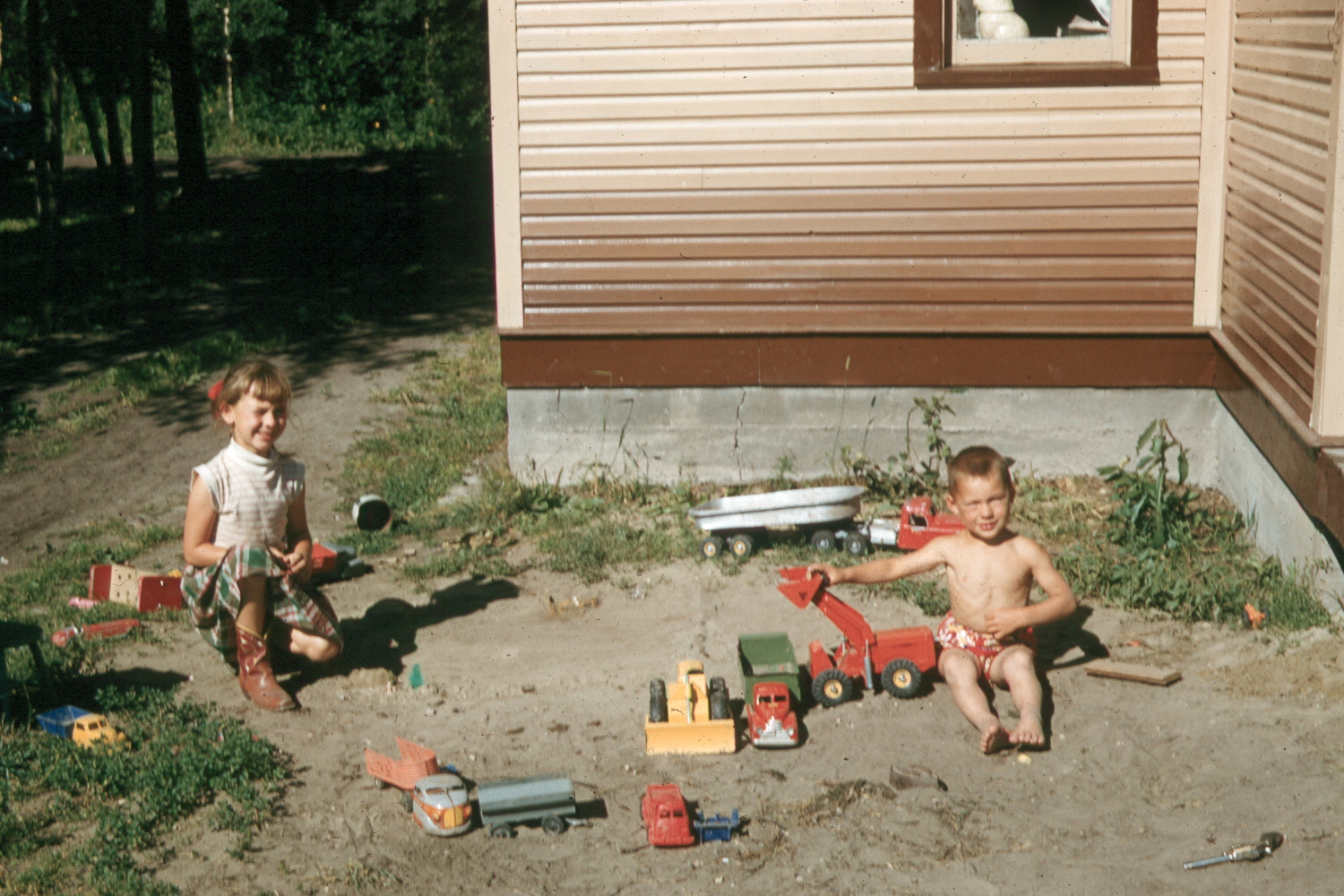
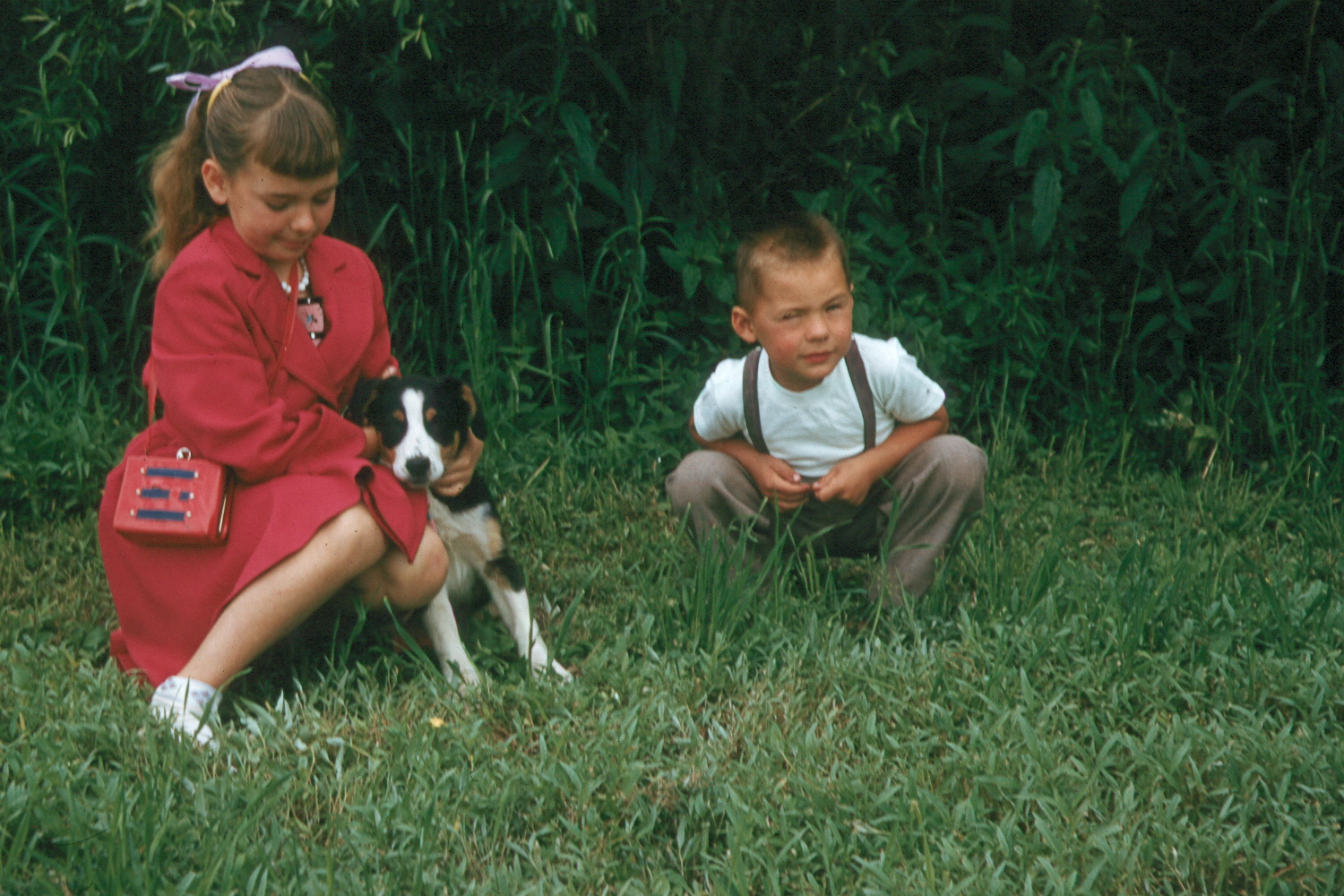
MarJean playing with Dicky in the dirt.
Scan463
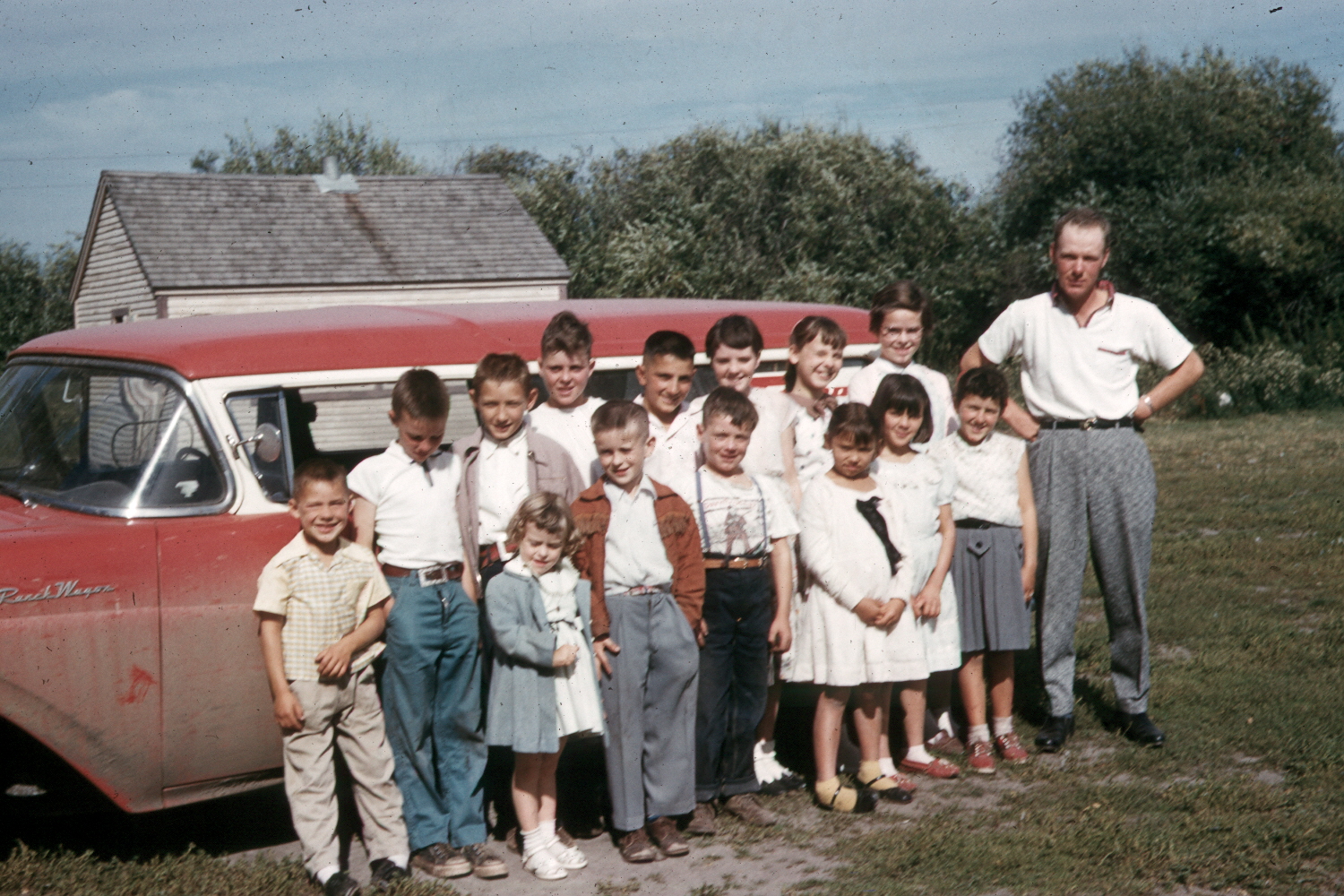
Kids we picked up for Sunday School

I figured that when I grew up, I did not want to marry a farmer. Sometimes when my dad came in from the field, only his teeth and the whites of his eyes were not back with dirt. Besides a huge garden to tend, chickens to butcher, bread to bake in a wood stove, water to haul in and out of the house, and summer guests to feed, Mother also milked the cow, churned butter, and made cottage cheese.

The Jersey milk cow we bought had big brown eyes and long eyelashes. . . and horns! I was afraid of this beautiful creature since she put her head down and chased us when we went into the pasture. One evening I leaned against a stack of bales to gaze at a prairie sunset. Suddenly, I felt hot breath on my neck—her nose nearly touching my face! I bolted to the top of that stack of bales and stayed up there until she finally wandered off.

I outgrew my little blue bicycle and Dicky grew into it, so Daddy asked my Uncle Pete to find a bigger bike for me at the auctions he frequented. He found one—a huge, ugly, faded green, man’s bike. Though it was way too big for me, I did learn to ride it because I had no other choice. One evening I straddled my bike on our bridge to observe another beautiful sunset. My feet could not reach the ground, but my right foot rested on the raised board at the edge. Suddenly, the bike began to tip! Afraid it would fall on me, I leaped and landed clear of my bike on the dry side of the ditch. Panic replaced relief because I could not breathe! After I caught my breath, I still had to haul that huge bike up out of the ditch. I did learn that watching sunsets can be hazardous to your health!

A grizzled, barking, ball of Lhasa Apso fur named Tiny joined our family. We also acquired a larger black and white farm dog. Mother did not like dogs or cats in the house or cars, so when we drove to pick blueberries on the ridge, Pup followed us. We spent the afternoon picking berries, and on the way home, since Mommy still didn’t want the dog in the car, he ran alongside. Suddenly, “Ka-bump!” She stopped the car and I dashed out! He was still alive, so then she helped him into the car. We laid him in the porch and I spoon-fed him medicine, but he died in my lap. We buried him, had a funeral, and I sang, “God Sees The Sparrow Fall.” I think my sincerity amused my mother. The long black fur of our next farm dog shone brightly in the sun from eating chicken eggs he found. Then he began to enjoy eating the chickens too. When Grandma and Grampa Schultz visited from Oregon, Mommy handed Grampa my dad’s hunting rifle to shoot Laddie, which he did. Farm life could be tough. I had to learn that economic survival took priority over pets, but I still could not reconcile the pain in my heart.

MarJean, Dicky, and Pup


In Autumn I entered grade five and was placed in the fast class. My teacher also entered me in a vocal music competition in a neighboring town. Mother told me to smile at the audience before I sang to calm my nerves, which I remembered to do. However, my nervousness erased the second verse, so I repeated the first verse and lost the competition. However, I often sang solos in church and Mommy taught me to sing as we stood and washed dishes together every day. She always made good use of time and told us stories or taught us things while we worked—doing dishes, shelling peas, or weeding the garden.

On my brother’s eighth birthday, he saw Daddy drive to the playground at recess. He ran to the car and Daddy told him his birthday present was a brand new baby sister! The hospital didn’t allow us to see her for ten days because many birth moms hemorrhaged from working too hard caring for their large families if they went home earlier. I was ten when Karen was born and this new darling creation became my real live dolly, which replaced my other dolls.

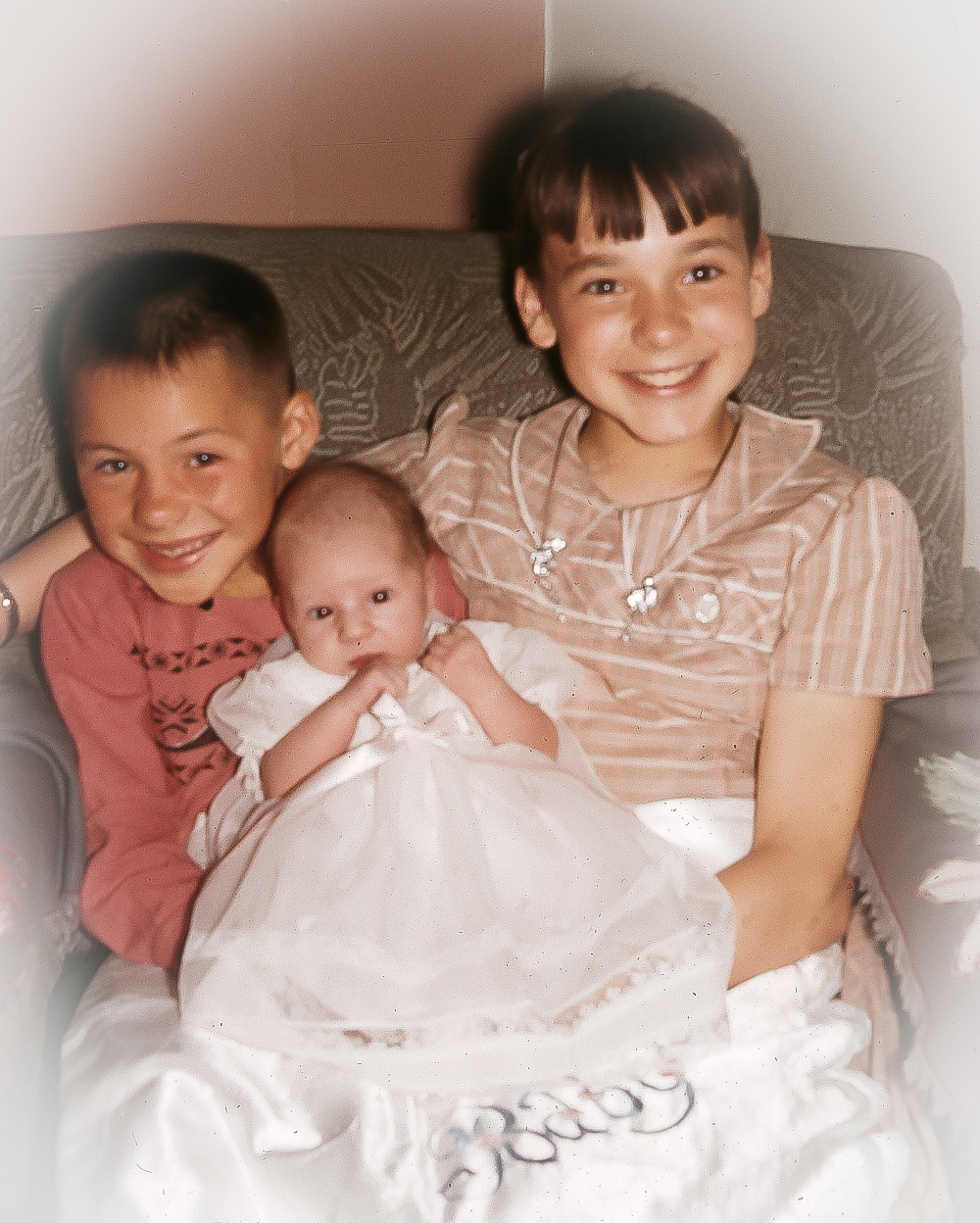
Dicky & MarJean with baby Karen
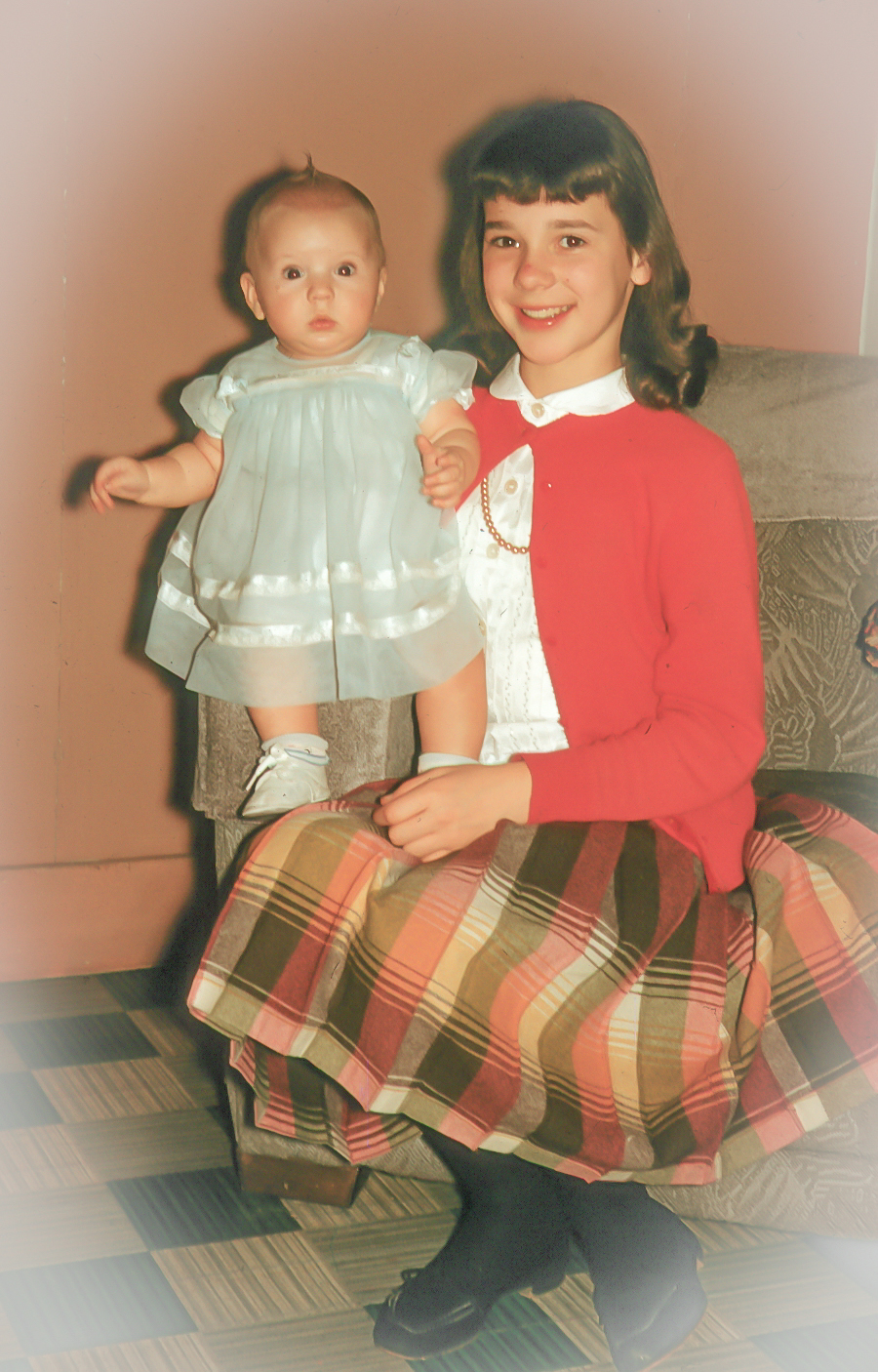
Me and my baby doll, Karen


In sixth grade, I remember having to take an I.Q. test to determine how smart I was. . . or wasn’t. Fears of being retarded still paralyzed my thinking. I’m sure I did very badly. It wasn’t long before childhood faded too soon into an unknown and scary world of adolescence. Seventh grade became a bad memory with a very strict gestapo of a teacher, Miss Denell. I was caught cheating on a test, which didn’t help. My body was changing, my emotions and sleep became erratic, and my childhood tenderness to the Lord waned.

When my dad made a deal to sell the farm, my already shaky adolescent world crumbled. Mom was from the States and they always said our next move would be to Oregon. To leave my home, my friends, my best friend, my first crush, my beloved grandparents in Dalmeny, and my beloved Canada felt unbearable. We even had to leave Tiny behind because it cost money to bring a dog across the border.

Mother tried telling me about the ocean, the fruit trees, and warm weather in Oregon. I figured the wind through the poplars sounded enough like ocean waves and berries grew on the ridge. Though God did not minimize my sadness, He also knew the plans He had for me. Somehow, He held me through my grief, stubbornness, and immaturity until He grew me up. . .  both of which He is still doing.

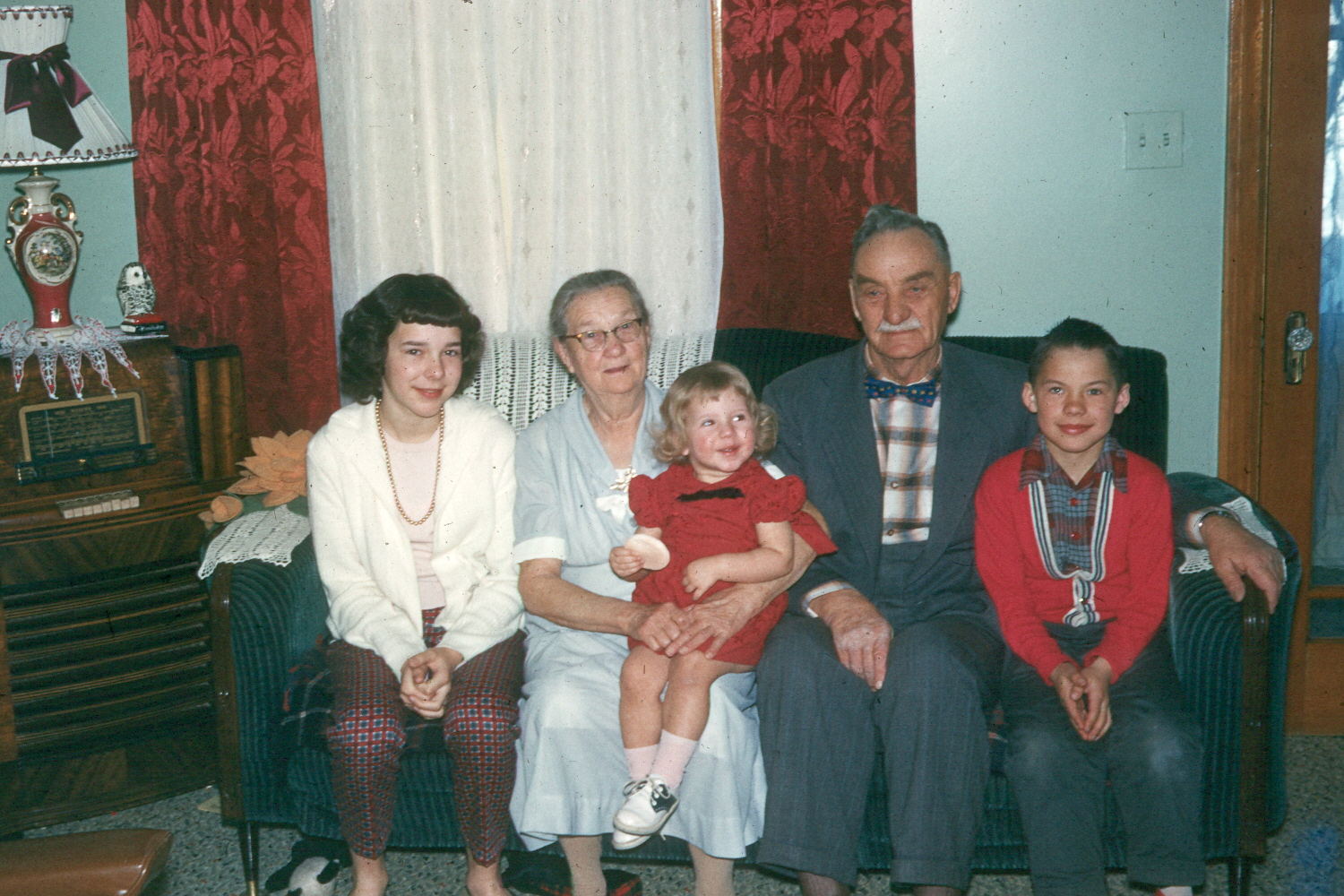
A sad farewell to Gramma and Grampa Quiring

THE ORCHESTRATOR

Rom 8-28&29

When they did not read my name, I felt alarm, raised my hand, and told the teacher, “I am slow.” The teachers quietly conferred, then allowed me to leave. It was the first day of fourth grade in Carrot River. The teachers read off names of the slower kids and assigned them to a cottage classroom. I had heard my mother say I was slow, but only years later did she explain that I was not a slow learner, but polio had slowed my energy. By the time I learned the truth, the damage was done. I was convinced I was slow, perhaps even retarded. The trauma, especially for a highly sensitive child, of changing schools twice a year for three years and adjusting to new curriculum, new teachers, new kids, and new sub-cultures every few months, reinforced the lie.

We moved back to Saskatoon after harvest into a house no bigger than a studio apartment with a basement. Our beds bordered the basement furnace and I played house under the stairs. Daddy sold McGeven’s Bread, my uncle delivered milk in a horse-drawn wagon, and I walked by myself to another large and strange school. Christmas programs came and went with few memories. For a short time toward the end of winter, I got to stop on the way home from school to attend a Bible Club where a very nice old-maid teacher, Mrs. Lepke, taught Bible stories with flannel graphs.

Early spring came and three girls began following me home, pulled my pony tail, kicked, and mocked me. Finally, in a rage spurned by fear, I screamed the worst thing I could possibly invent, “I hope you go to hell!” I was surprised at the shock on their faces as they backed off. Not long afterward, the girls waited for me again around the corner of the school. However, Daddy, Mommy, and Dicky came to pick me up that day in a brand new red station wagon to leave for Carrot River, and rescued me from my enemies!

Thankfully back in Carrot River, I invited kids on the school bus to come to Sunday School and told them my parents would pick them up. So when Sundays came, my parents used their new red station wagon to pick up children for church, which was miles and miles of country driving. When our station wagon became overcrowded, Daddy bought a panel truck to bring the kids to church.

That year he also put in a generator so our house had electricity. He built a bathroom complete with bathtub, sink, and honey bucket. He also built a garage onto the house and we put the milk/cream separator in the porch, since we now had a milk cow. Dicky’s and my beds had been moved into the unfinished attic on either side of the chimney, which we also shared with overnight visitors each summer. But late that fall, Daddy hired a man to finish our attic with two bedrooms and a closet between them.

Finally we could stay on the farm through the winter, and I did not have to change schools anymore. Dicky and I built snow forts and snowmen that didn’t melt until spring. Mommy still had to dry clothes outside on the clothesline where they froze. Then she brought them in and stood them up near the floor furnace grate between the kitchen and living room to finish drying. I remember being amazed how the long underwear could stand up all by itself. I finally had a friend I could keep all year. Her name was Ruthie. After church on Sundays we went to each other’s homes and made wonderful memories.

I look back now and realize God purposes to redeem the tough things in our lives by making us aware of our need for Him and to make us thankful for good things. Without changing schools, thinking I was a slow-learner, or feeling lonely and fearful, I may have excelled and succeeded in many areas of life. . . and become arrogant and unthankful. So, by God’s severe and loving mercy, He allowed me to experience my weaknesses, sins, and inability to succeed without Him, to eventually draw me into an intimately loving relationship with Himself—a far greater gain. I am thankful!

RAIN DANCE

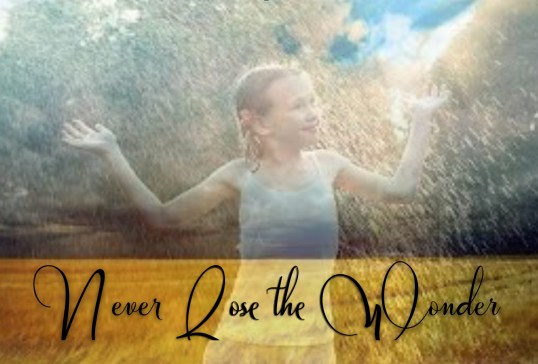
Never Lose the wonderAs young children, we don’t think we know all the answers to everything yet, so we find ourselves ever discovering and learning and wondering. Do we ever want to lose our sense of wonder and imagination—that desire to enter and celebrate life without analyzing or understanding it? I close my eyes and try to recapture and experience what it felt like just to be a child on a summer’s day. . .


A little cloud of stale dust follows my fingers across the wire mesh of the screen door. Flies and mosquitos drone and whine in the midday heat, trying to squeeze through the screen into the dull old farmhouse. Beads of sweat collect on my brow. My lips taste salty.

I focus through the screen to patches of thirsty weeds and dandelion fluff dotting the path to the barn. The poplar and willow bushes to the left and right stand motionless against a strangely dark horizon. To the right of the barn is Mommy’s vegetable garden. Past the garden is Daddy’s golden wheat field.

The screen door squeaks loudly into the stillness of the afternoon and slams shut behind me as I step out onto the porch. The silvered boards feel hot under my bare feet. The air is so still. Only the sky moves.

Dark, angry clouds move stealthily over the horizon like an advancing Nipawin war party. A white flash suddenly pierces the ranks, sending gun-shot thunder-cracks echoing into the distance. The poplars and willows begin to bend and sway to the roll of distant drums. Dandelion fluff whisks across the yard, whirling and dancing to the beat. Slowly, a dark shadow steals over the barn. The air is split by another flash of flaming arrows and a deafening crack vibrates the porch. The air turns liquid!

Rain dances hard on the porch, frothing and foaming into rivulets that disappear between the cracks of weathered boards. It beats on the dry ground, raising poofs of acrid dust. The barn looms up like a grey ghost behind the torrents of rain between us. The fields and Mommy’s garden mysteriously disappear into a white-blue haze. Sounds of a million drummers fill my ears. The wind whistles around the old farmhouse and sighs heavily through the trees. Another resounding crack and rumble add to the crying wind and pounding rain.

Slowly, the shadow moves and passes over the barn. Then, almost as suddenly as it all began, the rain stops, the wind dies. Rays of sunshine ignite the barn. Everything is dripping, glistening, steaming, and sparkling! The porch feels wet and warm. Cool puddles swirl around my toes.

I drink in the clean, sweet air in slow, deep breaths. Suddenly, with an enormous leap, I’m running, jumping, splashing, dancing! I’m a wild horse—the cool ground passes beneath my flying bare feet in a blur of sparkling puddles and swirling sand. My long mane flies and ripples behind me. The tree tops gently sway to the rhythm of my pounding heart.

Slower now… I catch my breath. High overhead blue sky and dark clouds waltz across the heavens. Between them, ribbons of brilliant colors cascade down to golden wheat fields. I stop and stare in wonder and worship. My child eyes both absorb and reflect the overwhelming vastness and beauty of the living, breathing heavens. Gradually the colors begin to fade. The clouds move away. The dance is done.

I turn and slowly walk back down our long driveway, circling puddles that quietly reflect the poplar trees, the blue sky, and my shadow as I pass by. Sodden legs climb the porch steps, and weary arms pull open the old screen door. I return to the warm familiar farmhouse, and the screen door whines and slams shut behind me. . . echoing through time.

SO MANY CHANGES

Psalm 23-1

THE northern winter temperatures would soon drop to forty below zero. Without running water, electricity, or indoor plumbing, to stay on the farm in that house after harvest was not an option. Though I already began third grade at Carrot River, we packed up and headed back to Saskatoon for the winter where we rented a basement apartment.

My new school was called the Princess Alexandria, but third grade was not in the Princess building. I remember telling the children around my desk about the magic water I brought to school in a tiny bottle. They were in complete awe, until someone dropped the bottle and all the magic spilled on the floor. I also told one of my new friends about Jesus. She even asked Him into her heart when she came to visit me one day.

After Christmas we moved in with a grumpy old German man named Mr. Brietkrietz. He said we could live with him if my Mother cooked and cleaned for him, since she “vas a goote farm voman.” Neighborhood kids came and pressed their heads against the screen door to see if we could play. Mr. Brietkrietz pounded little nails through a board, painted it white to camouflage the nails, and put it where the kids would get hurt if they leaned on the screen. My Daddy decided to take it off.

That spring I loved to ride my bike on paved streets and go to the paddling pool. My neighbor friend told me we could also explore a field at the edge of our neighborhood. We rode our bicycles there and discovered a hole in the field big enough to hide inside and use for our secret fort. However, we needed to furnish it so we rode our bikes back to the swimming pool and borrowed people’s towels from the dressing room. We took them to our fort to cover our dirt couch. The next few days I felt deep conviction. I had stolen those towels and needed to repent. I rode back to our fort by myself, rescued the towels, and returned them to the dressing room at the pool. I came home, sat on my bed, and sincerely asked Jesus to forgive me. I sang, “Into my heart, into my heart, come into my heart, Lord Jesus.” He already was there and did forgive me.

Some days later as I rushed down the stairs to the basement, I slipped and bounced all the way down on my bottom. When I hit the last stair, I could not breathe, although I screamed, “I’m going to die!” Mother had just left for the store, but Daddy came running. He got me to lie down and calm down. After they took me to the doctor, who said I just had the wind knocked out of me, it still hurt to breathe. They decided to take me to Mrs. Friesen (“Bukka Friea”)—a large, strong, Russian woman amazingly gifted in what I can best describe as a combined massage therapist and chiropractor. People came from all over the country for her treatments. She covered me in Blitz Ale (Lightning Oil) and got to work. She said my ribs had pushed into my lungs, but in one treatment I was better.

What bothered me most was how afraid I was to die. Christians aren’t supposed to be afraid to die because we go to heaven. However, my mother assured me that not wanting to die was okay because Jesus gave us the will to live. Otherwise we might all want to die now and go to heaven, and that was not God’s plan. My Aunt June had me memorize Psalm 23 when she and my grandparents came to visit us from Oregon. I never ever forgot it.

We were glad to move back to the farm again that spring. In my eagerness to rediscover my toys in the winter storage shed, I did not wait for anyone to help me. I began to move stuff around so I could get out my dolly carriage. Reaching it, I lifted the little blankets and without warning, something suddenly bolted into the air! I fell backwards over the garden tools while a whole nest-full of frantic little mice ran over the top of me! In sobs of terror, I ran back to the granaries to tell my Dad what happened. He just laughed. Sympathy did not come easily on the farm.

At the end of that school year, I remember sitting in my cottage classroom while our teacher read the names of the kids who passed. I was scared to death that my name would not be read. We had some really big kids in class that had been kept back, some more than once. To my great relief, the teacher read my name and I passed into grade four. That year faded into history but the geographical changes and heart changes continued to affect my life.

Religion or Relationship?

1Pet 1-8Relocating to a new area and a new culture typically brings feelings of loneliness and isolation, which I’ve experienced so many times. God created us for relationship and made provision for it through His body, the Church. In my long cultural and religious Mennonite Brethren heritage, the gathering of believers is central to life. Though religion itself never saved anyone, it set for me a foundational precedent.

  • My roots go back to German-Dutch Anabaptists who left Holland because of religious persecution. They settled in West Prussia for about 250 years until the Prussian government eliminated exemption from military service on religious grounds.
    When Catherine the Great of Russia issued a Manifesto in 1763 to invite Europeans to settle in Russia and granted Mennonites exemption from military service for twenty years, they accepted the invitation and established colonies that produced 6% of all Russian wheat.
    Some who strongly believed in repentance and acceptance of Christ as a personal Savior, as well as discipline, prayer, and Bible study, formally broke with the main church in 1860 to become the Mennonite Brethren.
    In 1870 a Russification plan ended all special privileges. The Mennonites had ten years to conform or leave Russia. The loss of exemption from military service and their right to use the German language in their schools, started a migration to the Americas. My grandmother Quiring came from Alexanderthal, South Russia at nineteen years old. Though there is no Russian in them, all my great grandparents were born in Russia and migrated to Minnesota or Saskatchewan.

With that kind of heritage, we never even considered not attending church. Someone told us of a Mennonite church south of town, so we went. When we walked in, no one said anything to us until one man told Daddy, “In this church, men and women do not sit together.” Then he asked, “Kounst du auch Deutch?” Daddy told him, yes, he knew German. Mommy and I sat on the ladies’ side. Mommy felt very lonely since our move. She tried to make friends with a lady with little children, but the lady wasn’t interested. I recognized a girl from school but even she didn’t talk to me. We sat through Sunday School and the church service, then walked out very slowly, hoping somebody would talk to us, but nobody did. Outside the church, we found Daddy with Dicky. Mommy asked, “Doesn’t anyone want to talk with you either?”

He said, “No.” When we got into the car he added, “Well, we have been here twice. The first time and the last time.”

We noticed a building on Main Street in Carrot River called The Gospel Mission. The shabby white Mission with storefront windows was tightly sandwiched between two other old buildings. A sign in the window gave the service times. The next Sunday we arrived on time but nobody else came. Someone later told the preacher we moved there so he came to visit us. Daddy told him we had been to the church but the door was locked. He said that was a sign from last year, but they never bothered taking it out when they changed the time because new people didn’t come anyway. He said he would invite us to church but because of some trouble, they were closing the church down. We decided to visit anyway.

Just a few people came, very few—maybe fifteen. An elderly man from the Salvation Army whom everyone called “Dad Little” played an old pump organ, was happy, and sang heartily. We joined in with gusto! Perhaps the addition of a new family was the encouragement they needed. It didn’t take long and more people began to come. Pretty soon we had thirty and forty people coming and it continued to grow. We enjoyed the people, were friendly, and they came to know us. When we sang, I remember feeling a bit embarrassed because my Mother sang louder than anyone else. She was used to good, strong Mennonite music. She took the junior high and high school girls under her wing and held a Bible class for them on Wednesday nights. As the body of believers continued to grow, they hired a preacher and purchased an existing building from the country, which they moved onto a lot in town.

Many Mennonites hold strongly to their religious and cultural roots. Attending the Gospel Mission with people without Mennonite roots, I learned early that roots in a religious system mean nothing compared to a relationship with Jesus Christ and with His people. What matters is that God gave His only begotten Son to die in my place to pay for my sins, that He physically rose again to intercede for me at the Father’s right hand, that He sent His Holy Spirit to indwell all who receive that free gift of salvation, and to strengthen them to live by God’s grace and power to love each other.

His body—The Church—serves to fill that inherent longing for love, acceptance, and oneness. Of course, Satan hates the Church, but Jesus said He would build His church and the gates of hell would not prevail against it (Matt. 16:18). Through my years, I’ve seen church battles, splits, and hurt, but also victories, grace, and love. God knows the hearts of those who belong to Him and He loves His Bride! I deeply value my roots of theological and biblical conviction, of ancestors who sacrificially forged their way to religious freedom and grandparents and parents who prayed for me. Yet religious roots or pedigree without relationship is dead. It cannot compare with a personal relationship with Jesus Himself. Peter tells us, “Though you have not seen him, you love him; and even though you do not see him now, you believe in him and are filled with an inexpressible and glorious joy (1Peter 1:8).

NO ILLUSION

Scan522
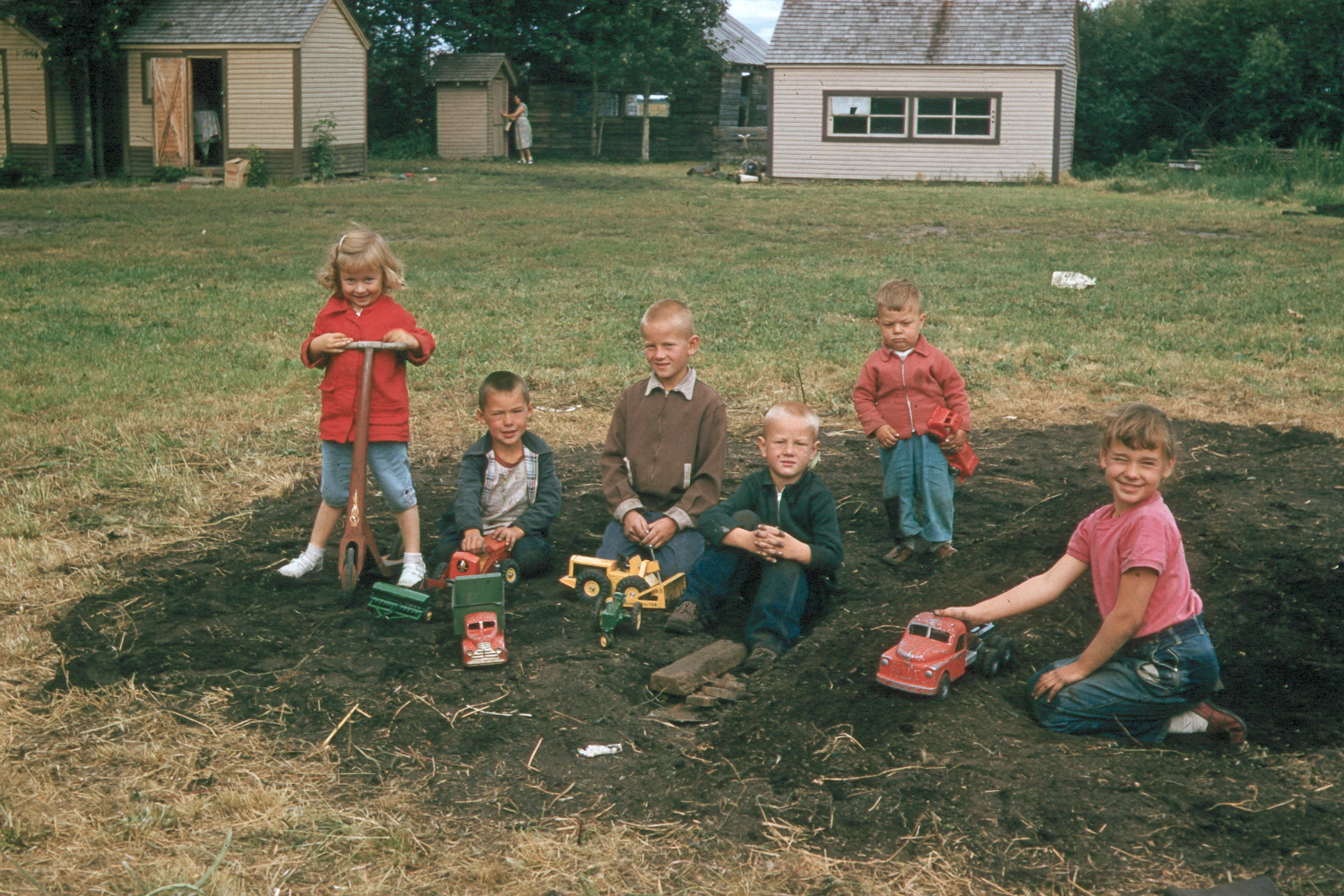
Playing in the dirt, making roads with my Dyck cousins.
Scan458
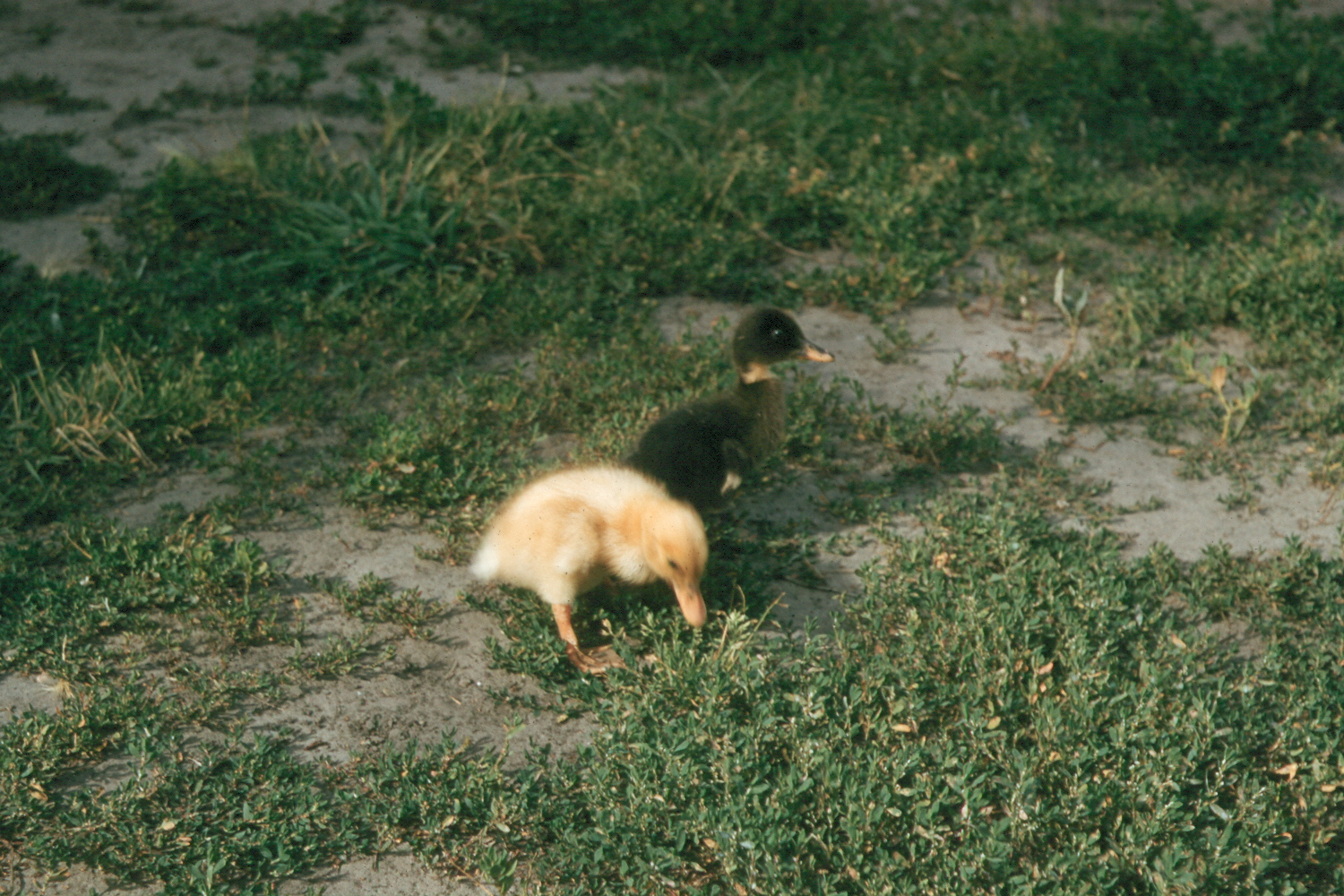
My yellow duck and Dicky’s black duck.

His personal gifting for promotion and sales persuasion gave us a vision of farm life as a glorious and wonderful adventure. Daddy believed in his idealistic dreams and could enthusiastically bring others along with him. I so loved and adored him! However, I’ve had to deal with my own illusions and the pain of disillusionment, of loss, and disappointment.

My budgie bird went first. Someone placed her cage on a stack of boxes in the house when we first moved in. The cat and her kittens went into the barn. Somehow the cat sneaked into the house, got the cage open, and ate my bird—easier than finding mice that first week! Besides being a killer, this cat seldom let us catch her. We were so excited that she would have kittens, but after they came, she kept hiding them in the hay loft until they grew big enough to run away, which they all did. In the process, I discovered my allergies to both hay and cats.

I did love that big Irish Setter named Lucky and drug him all over the farm. However, my Dad hung a prize ham in the front porch to cure and one night Lucky squeezed through the screen door and helped himself. When Lucky disappeared, my parents said he followed my Dad to the woods and didn’t come back. I waited but he never did come back. Some time later Dicky and I were playing behind the barn and digging in the manure pile with shovels, for whatever unearthly reason, and discovered familiar red fur. I knew then why Lucky never came back. My parents just told me, “Lucky wasn’t lucky.”

That spring a box of fluffy, yellow, peeping baby chicks arrived. We were so excited! Mommy put a heat lamp over their pen and they all snuggled under it together. However, I soon learned those cute baby chicks can become cannibals! They peck at each other and when they see blood, they all peck on the bloody chick until they kill it! They also get quite ugly when feathers begin to replace that soft yellow fluff. Then in fall, Mommy chopped their heads off.

A neighbor gave us two ducks. My duck was all yellow and fluffy and Dicky’s was black with a yellow ring around his neck—just the cutest, funnest, and most wonderful play things! After a rain, the ducks just loved to play in the puddles on our circular dirt driveway. Then one day someone drove around the driveway and accidentally ran over my duck. So many tears! We even bought a few full grown geese, but they were scary because they would chase us with their wings spread out and loudly honk at us. They mostly chased Dicky who learned to run really fast!

We also bought two pigs. Mine was white and Dicky’s was black with a white collar. One day when Daddy worked on the fence in the pig pen, Dicky stood guard at the small open gate. Suddenly my pig made a dash for the opening, ran between Dicky’s short legs, and carried him out for a very scary piggyback ride—backwards! Not long afterward, my pig ate fish garbage, which poisoned her. I watched Daddy bury her in the field. While eating dinner one evening Dicky asked, “What kind of meat are we eating anyway?” Without looking up, I told him, “You’re eatin’ your own pig!” Such was farm life and we were learning not to attach.

Farm chores were not as fun as I first imagined or as Daddy had described. Cleaning out the chicken house definitely was not fun! Gathering eggs became scary business because the old hens didn’t always want to leave their nests and pecked at me. One time, just as I pulled a hen off her nest by her tail, she laid an egg and I caught it in my basket. That was kind of amazing! As great as it was to eat fresh peas and carrots in the garden, weeding it was hot, dirty, buggy, and boring.

One summer day Dicky and I imagined the fun of sleeping in the barn, inspired by the rusty old metal bed frame and springs left in there. Our parents, surprisingly allowed us this adventure. Beyond words with excitement, we got all our stuff together to camp in the barn that night. Daddy came to say goodnight, blew out the lantern, and went back to the house. At first we were too excited to sleep, but finally settled down into the growing darkness. Far out in the country, it is very, very quiet. . . that is until we hear mice scurrying or more probably rats! How dare we even touch the floor with our bare toes, much less run for the door?! . . . But we did!

So many things I cared about either died, ran away, were eaten, or shot. The vision and glory of gathering eggs, farm chores, or animal attachments disintegrated. Yet in spite of loss, I grew to love the farm. With my conservative Mennonite heritage and a mother whose favorite words were discipline and obedience, God knew my need for freedom. Besides farm chores, the farm gave me freedom to run and play, climb trees, play in the drainage ditches, explore, create, make forts, ride my bike, and even make roads in the dirt with Dicky—all with complete outdoor-girl abandonment.

Greater losses were yet to come. Yet, disillusionments in this life must come so our illusions fall away and we can fall in love with what is real. I think God redeemed these early losses to instill within me the realization that everything in this world is temporary and He alone is eternal. Through Him I live and move and have my being (Acts 17:28). He is the ever-living bedrock that never moves, leaves, or changes—always predictably gracious and loving, disciplining, correcting, instructing, yet compassionate and comforting. He is my Constant and He is no illusion!

A New Direction

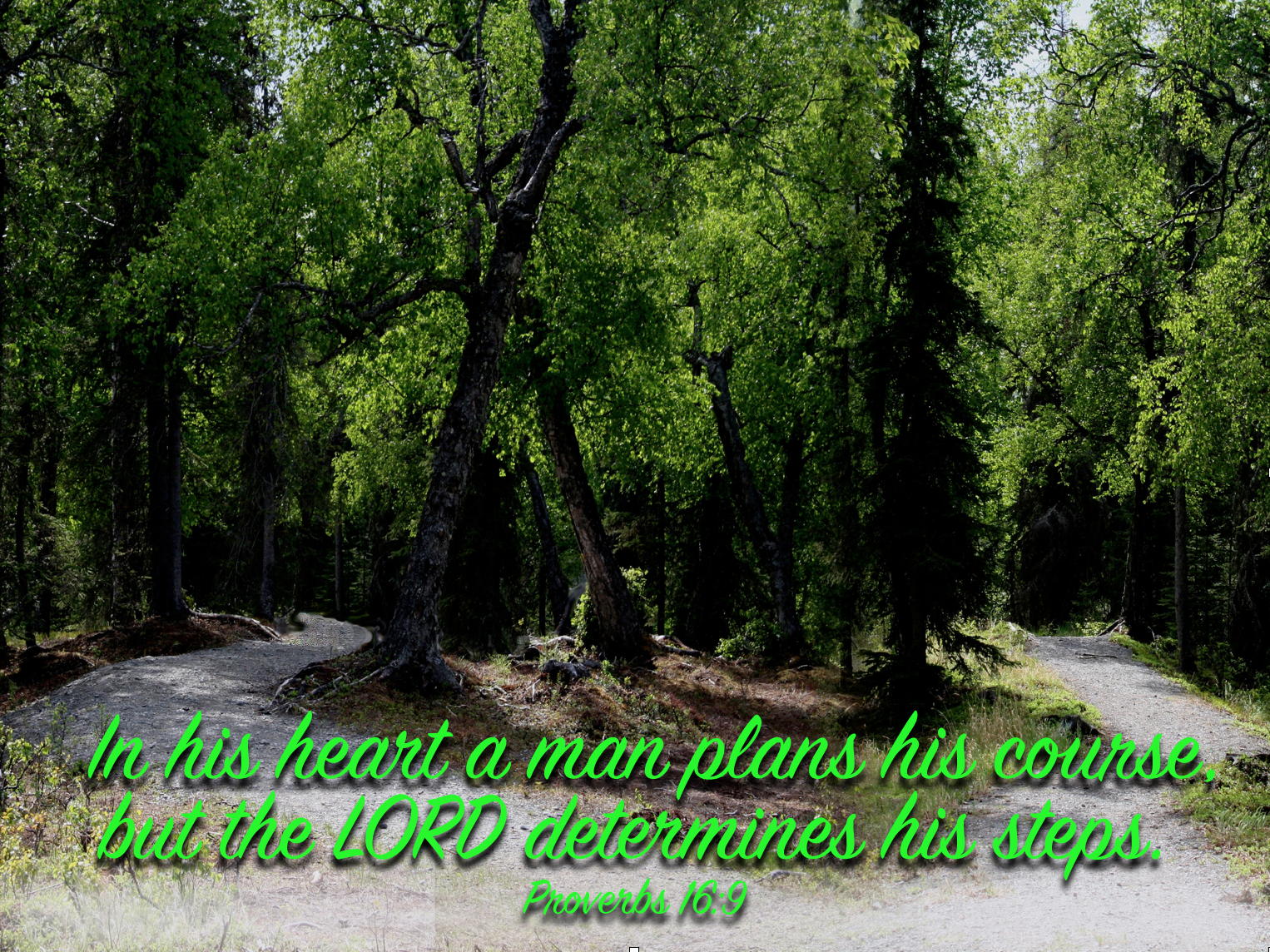
Proverbs 16-9 typeset
We snuggled with Daddy on the couch and after our Bible story he began to talk about living on a farm—about chickens and ducks and geese and gathering eggs, about playing in the barn and buying a cow and calves and pigs. It all sounded absolutely delightful! Actually, he had already traded the store for a farm up north—sight-unseen. His doctor had told him he needed to get out of the stress of business and try farming to ease the long-term effects of polio on his nervous system.

So we loaded a truck with all our possessions, including my budgie bird, a pregnant cat, and a stupid, lovable Irish Setter that rode in a wooden crate tied to the roof of the cab. Off we drove for 200 miles on gravel roads to a remote place up north called Carrot River. Within a half mile of our farm, the road suddenly ended. A heavy spring run-off had washed out the bridge.

However, the neighboring farmers alerted one another, met us there, unloaded our truck, hauled all our stuff over the swollen stream on planks, drove it half a mile, then carried it over another bridge-washout at our driveway. Without telephones, electricity, or affluence, these neighbors had learned to care for one another. These were tough men and women with large families—survivors, who had carved out their homesteads by hand and made a hard living by farming the rich northern soil.

Inside our farmhouse kitchen stood a woodstove, a few cupboards and a sink without faucets. Under the sink sat a five-gallon slop pail to catch the dishwater and food scraps. On the counter we put a pail of water with a dipper for drinking. Every gallon we pumped from the well had to be carried in and out. Mommy heated water for our baths on the woodstove in a large kettle to add to a three-foot-square, galvanized tub set in the middle of the kitchen floor. We bathed in turn from youngest to oldest. We used the outhouse in the daytime and a chamber pot at night.

In the middle of the old linoleum kitchen floor, a trap door opened into a hole in the ground called a root cellar. A small living room extended to the right of the kitchen followed by my parent’s small bedroom. To the left, an oversized hallway led to stairs ascending to the unfinished attic. Dickie and I slept in the hallway. When evening came, we often sat outside but had to light smudge pots of peat moss and dry leaves to smoke away the mosquitoes. In the house at night, we used coal oil lanterns for light.

That spring Dicky and I eagerly explored every nook and cranny of the farm. I can still remember the pungency of oil in the old sheds, smells of rich black earth, wet peat moss emerging from the snow, pussy willows bursting, and green things growing. We rode our bikes all over the muddy farmyard, that is until my bike tipped and I fell into a patch of hive-raising nettles—my first clue that farm life had it’s dark side.

A few yards from our house stood the pump shack and a storage shed. We always primed the pump by pouring water into it and then pumped like crazy. Without a refrigerator, Mother hung food in a pail down in the well to keep it cold. Daddy bought her a wringer washer and put up a clothesline. They put in a huge garden beside the barn where the soil was most fertile. The vegetables grew quickly during the long days of sunlight this far north. We had to help Mommy keep the garden weeded, which I don’t remember as fun at all.

In summer, lots of company came from Saskatoon and Dalmeny—so much company! When they came, they always filled the car with as many people as they could get in it and stayed for days. Some even stayed a couple weeks with their whole family for their vacation. Mommy baked and cooked for the whole gang on her woodstove and bought flour by the 100-lb. bags.

I can’t even imagine how my mother could work so hard with no modern conveniences. She was young, strong, resourceful, independent and a graduate of the Bible Institute of Los Angeles, where she and two of her sisters sang on the BIOLA Hour radio program as the Schultz Trio. After graduation she made plans to go to Africa as a missionary and packed her trunk to go. When God closed that door, He opened another one in Dalmeny for her to teach Bible school and lead their choir. That’s where and when she met my dad. They married in Dallas, Oregon but returned to Saskatchewan.

Proverbs 16:1 says, “To man belong the plans of the heart, but from the LORD comes the reply of the tongue.” God did not call my mother to Africa, but to primitive living in northern Saskatchewan. Though her sisters lived in beautiful, modern homes with all the advantages of affluent American living, God gave Mom a calling with the strength and grace to live with so much less. I saw her live among these farm folk, become one of them, and minister the practical love of Jesus to them.

As I grew, my growing independence clashed with Mom’s management skills many times, yet I look upon her now as my hero, my mentor, my role model for strength and faithfulness. She carried 1Cor. 15:58 as her life verse, Therefore, my beloved brethren, be ye stedfast, unmoveable, always abounding in the work of the Lord, forasmuch as ye know that your labour is not in vain in the Lord. Mother paved a road for me that I can walk because I know He leadeth me, He leadeth me; by His own hand He leadeth me. His faithful follower I would be, for by His hand He leadeth me.

Scan442-2 copy
Scan443-2 copy 2 The drainage ditch that flooded and washed out the bridge to our farm in 1955 and photo of our Carrot River farm after we painted.

Experience–The Best Teacher!

Phil 1-6Yes, I grew up on a different planet. A planet on which the early foundations of my life continued to form. We began each morning at Dalmeny Elementary by singing Oh Canada. Then the teacher read a story from the Bible. At the end of each day we sang God Save the Queen. The first two grades were combined in one classroom with one teacher.

My mother worked long hours in our store with my dad, so in first grade she hired an older girl to help me learn to read. I learned quickly with her help. I knew Mommy was not happy with my first grade teacher because she did not teach me to read. One day I figured out that I could think bad things about her and she would never know. Suddenly to my surprise and shame, she looked straight at me and asked, “MarJean, are you mad at me?” I learned that my face could betray my ugly thoughts!

A girl seated at the back of the second grade side of the room was a really good artist. One day I walked behind her desk to look at her picture and I told her how beautiful it was. Then, pointing to my own picture, I told her mine was not very good, hoping she would return my compliment. Instead, she agreed with me. Psychology lesson 101— When you fish for a compliment by saying something negative about yourself, that “fish” can slap you in the face!

A beautiful blue budgie bird came to live with us on my sixth birthday. We trimmed her wings and I made little houses from shoe boxes and cut windows and doors for her to go in and out. However, her wings grew back and one day she flew up and disappeared completely. I looked everywhere but couldn’t find her. So I knelt down by my bed, folded my hands, closed my eyes, and prayed earnestly to Jesus to help me find my bird. When I opened my eyes, there, right in front of me on my bed, stood my bird! I knew beyond doubt that God heard and answered my prayer!

Christmas Day after my seventh birthday, most of our relatives gathered at my grandparent’s home in Dalmeny. Being the second youngest boy of twelve siblings, my Dad’s relatives filled the house. At some point, I heard a conversation about becoming a Christian. That Christmas Night, God’s Spirit drew me to Himself, so I asked one of my cousins to come with me into Gramma’s bedroom. We knelt by Gramma’s bed and I asked Jesus to forgive my sins and come into my heart—and He did!

As if I had not spent enough time in hospitals, my tonsils and adenoids became inflamed that winter so out they came. I remember the doctor telling me to blow away the bad ether smell. So I took a big breath to blow it way and immediately the room spun into a tunnel. I awoke very sick and nauseous. Once home I needed to lay still, so I got to watch Disney’s Dumbo on our small black and white television, but felt too sick to keep watching. A few days later company came over and I felt better so I ran and played with the children. However, my nose began to bleed until it came out of my mouth. I still remember the fast ride back to the hospital that night. The hemorrhage finally stopped and we came home and life went on.

One spring day my teacher asked us to pass our papers to the person behind us for grading. I understood her to say, “Draw a lion beside every right answer.” I already loved to draw so I quickly drew a lion’s mane and face beside the first right answer. The teacher read the next answer and the next and I could not possibly draw lions that fast! I panicked and raised my hand. The child in front of me turned around and exclaimed, “She’s drawing on my paper!” The children immediately gathered around me with the teacher who said, “No, MarJean! I said a line, not a lion.” Snickers even from second graders can leave a lasting impression of feeling really, really stupid!

Second grade also brought success. All the district schools came together for an oratory competition for grades one through eight. My mother had taught public speaking and English in Dalmeny Bible School when she met my Dad, so she taught me a poem called, The Little Elf. I barely remember reciting it before the large crowd, but I clearly remember walking home hand in hand with my mother, knowing that she was very proud of me. The small silver trophy I received for first place gets polished maybe once every five to ten years, but still serves to remind me that I was capable of doing something valuable.

I may have grown up on a different planet, but the lessons are the same: Our faces reveal what is in our hearts; Putting ourselves down to be affirmed can backfire; God hears and answers our prayers at just the right time; We all need Jesus to come into our hearts and forgive our sins; Life is fragile; Feeling stupid hurts; Feeling valued heals.

“. . . being confident of this, that he who began a good work in you will carry it on to completion until the day of Christ Jesus.” Philippians 1:6

The Store and The Devil

Phil 2-13 #2IN AND OUT OF EVERY STORY,  GOD weaves His love and grace. His nail-pierced hands hold the threads of our lives as He intertwines them into His plan and eternal purpose. He wrote each of our days in His book before one of them came to be (Psa.139:16). So I continue to tell my story and pray God will reveal more of Himself to me as I write and through me to encourage you. I choose to trust Him for that sweet grace.

SO Daddy bought the Variety Store on Main Street and we moved back to Dalmeny while I was still five years old. Its wall-sized front window faced the street, which my little brother broke one day by throwing rocks at it. Upstairs was a big room with a lot of dusty old shelves. My parents cleaned it up, built rooms, and made it our home.

On one side of the store I could help myself to bins of fruit. Candy lined the shelves by the counter in the center of the store, but I preferred the fruit. On the other side of the store were shelves of tools, to which my little brother helped himself and ended up leaving at various places in town. Just one man returned the ones he found. Both Daddy and Mommy worked in the store while Dicky and I were free to come and go. Every night Daddy poured dark green pebbly stuff all over the wooden floors downstairs and then swept it up again, which didn’t make any sense to me. Some nights my brother and I fell asleep upstairs in the living room before they came to put us to bed.

One day as Dicky and I watched people come into the store through the floor register between our bedroom and the front counter downstairs, we decided to see how many people we could hit with our spit. We hit some people and missed others. All was funny until a bald man stood below us. Sure enough! We made a direct hit, but had not anticipated the not-so-funny response when he looked up and saw us. Bad, bad idea!

The building to our right was called Central. They managed the telephone service. A telephone was a big wooden box on the wall of each home with a handle on the right to crank the ringing sound and a bell shaped handle on the left attached by a cord to put to your ear to listen. The box also had a long metal piece that came out of the front to talk into. Every phone in town rang whenever anyone got a call so everyone could listen to anyone’s conversations if they wanted to, which they did. Each person on that “party line” had their own code of short or long rings so you knew if the ring was for you.

Every day at noon, an older boy from Central walked across the small empty lot to the side of our store and pushed a button up high on the outside wall. When he did so, a siren sounded. One day I looked up at that button and decided to push it myself. I could not reach it, but with a little ingenuity, I found my little bother and a long stick. I lifted him up and told him to push the button with the stick, which he did. Of course the siren sounded long and loud. Immediately people ran from every side of town until I could hardly make my way through the crowd. Suddenly Daddy appeared in front of me and asked if I rang the siren. I had to tell him, yes. The only other time besides noon that the siren rang was for a fire so everyone came to see the fire, but of course no fire existed. I still don’t know why my Daddy thought to ask me if I did it.

To our left was a small grocery store and on the other side of that was a dark and very dirty automotive garage. One Sunday afternoon my friend and I saw a ladder going up to the roof of the garage and decided to climb it, even in my pretty white and yellow church dress. It felt wonderful and daring on top of that roof! Then I noticed a shiny place that looked slippery so I scooted my bottom down onto it for a little slide. Suddenly, the “slide” broke beneath me! I scrambled off, but before I could get down the ladder, Mr. dirty garage man raced around the corner to find out who was on his roof! He told my Dad he heard the window break and looked up to see a patch of white and yellow coming through the sky light. Of course I was in big trouble!

Our playmates, Murray and Juliene, lived at the back of the post office across the street. Murray and Dicky played barber one day with an electric shaver. Soon Murray’s thick black hair sported lots of white scalp spots before his Dad found them and just said, “Well son, did you pay your barber?”

Further up Main Street was the school I would soon attend, and down Main Street were the train tracks where kids put nails and other metal things for the train wheels to flatten. Mommy said not to put stuff on the tracks or the train could derail. That was a scary thought!

Because of the effects of polio, I still needed naps until I started school. One day Mommy put me in her bed for a nap. I hated naps and lay there thinking bad thoughts. Suddenly I became aware that those bad thoughts were from the devil. So… I raised my foot and kicked him off the bed! When Mommy came to see why I was giggling, I told her what I did. He did not return to tempt me again that hour.

I got to thinking one night about how lost the devil was, so as I lay in my bed I told him all about Jesus and how he needed to ask Jesus to forgive his sins. When I excitedly told my mother what I had done, she very seriously told me never ever to talk to the devil like that again because he could never be saved.

I do remember he told me in my thoughts that I could sin if I wanted to because all I had to do afterward was ask Jesus to forgive me. Yet, I knew in my heart that was not a good idea. Our enemy respects not age nor innocence and tempts little children as he does adults. Yet, even then the Almighty kept His hand of protection over me and was deeply involved in my life. Even then He was drawing me to Himself and growing in me a spiritual awareness of good and evil, right and wrong.

Continue to work out your salvation with fear and trembling, for it is God who works in you to will and to act according to his good purpose.” Philippians 2:12-13.

Advice From a Five-Year-Old

Prov 17-22

A cheerful heart is good medicine. Proverbs 17:22

WELCOME to some comic relief after the seriousness of past blogs. Inspired by All I Really Need to Know I Learned in Kindergarten by Robert Fulghum, I’ll share a bit of “wisdom” from the perspective of a five-year-old. As we learn to navigate through life, experience becomes our best teacher and humor can redeem that experience. What seemed so end-of-the-world traumatic to a five-year-old, ends up bringing a smile or even laughter given time and distance. Too many stories dot my fifth year of life to share at length, therefore, enjoy a few snippets from that year to remind you to smile at your own childhood experiences.

  • When you swing on the lawn swing with a cute little neighbor boy across from you, do not let him lean over and kiss you, especially not if your parents are watching from the kitchen window. You just might burst into tears with embarrassment, Georgie will run away, and you may never see him again!
  • When you get an idea to go home with a friend after kindergarten without permission, it is not a good idea because your parents will go to the police station to find you. Plus you have to be able to tell your friend’s dad how to drive you back to your house, and if you already have directional dyslexia, well, it takes some time to find it.
  • Cutting off your ringlet, even if it keeps getting in your face while trying to cut out a jack-o-lantern in kindergarten, is not a good idea. Also, do not cut off another one when you get home.
  • It is never a good idea to draw on walls no matter how great an artist your parents said you were. It can break your heart to actually be spanked for making something beautiful and for them not to understand that.
  • Do not go for a walk in the garden in the spring, even with your mud boots on, because they get stuck and your sock foot will come right out and you’ll have to step into the mud so you won’t fall over. Then you’ll have to cry very loudly ‘cause Mommy does not like dirt, especially not mud, and she’s the only one around who can rescue you.
  • It is a bad idea to make dots on your drawing paper with a sharp pencil when it is on a vinyl kitchen chair just because it sounds cool. And when your Daddy sees holes in the chair, don’t tell him you didn’t know you were making holes. If he believes you, he won’t spank you, but you’ll feel very guilty for lying.
  • Never tip a full bottle of orange soda pop toward you from a high counter to reach the straw.
  • Don’t eat too much watermelon before bedtime. A bad idea.
  • It can be a good idea to stick your hand or foot over the edge of your bed at night to prove nothing will grab it even if you’re scared something will.
  • It is a bad idea to play that you are blind anywhere near a long open staircase. It can scare the living daylights out of you when suddenly the floor is gone and you sort of bounce and fly all the way down the stairs, even if your Mommy catches you at the bottom.
  • If your Daddy has an idea to bring home a brand new tiny puppy that doesn’t know where to go potty, don’t expect your Mommy to let you keep it for very long. And when you grow up, you’ll always kind of wonder what ever happened to that little puppy.
  • Don’t chew on soft tar from the street even if it is someone else’s idea of chewing gum and don’t try to feed the gullible little neighbor boy dirt by the curb even if you have a spoon to do it.
  • It is a cool idea to put dry dirt on top of a wet mud-pie because it feels soft and you can push on it without getting mud on your hand.
  • It’s a bad idea to tell your little brother to do stuff you are scared to do, like jump off a dry docked diving board onto the sand. He will learn not trust you.
  • When you are busy playing or drawing or making something, it is not a good idea to try to wait too long to use the bathroom!
  • When your grampa lets you comb his hair, it is not a good idea to turn the comb around and around in his front wave. Even if he is a very kind and patient man, it still is a bad idea.

. . . if you accept my words and store up my commands within you, turning your ear to wisdom and applying your heart to understanding—indeed, if you call out for insight and cry aloud for understanding, and if you look for it as for silver and search for it as for hidden treasure, then you will understand the fear of the LORD and find the knowledge of God. Proverbs 2:1-5

In a few days I’ll post, “Store Adventures and the Devil.” You may not want to miss it!