Before Difficult Days Come

Dear ones,
I HAVE NOTED that high school senior girls are beautiful, enthusiastic, energetic, excitable, eager, as well as serious and a little unsure about their future. My husband and I meet weekly at school with a group of these senior girls over lunch to encourage them in their faith.
I’ve also been privileged to attend the Fall Formal, Prom, and Spring Banquet with Don, who takes photographs at these events. The images linger in my mind—beautiful young women in gorgeous gowns, with perfect makeup and hair falling in exquisite curls onto smooth bare shoulders. The young, strong men escorting them look like princes, with bright eyes and handsome smiles beaming over their dates.
Ahhh… the days of our youth when we too were young, vivacious, and beautiful.
Don and I have been having many conversations about what is happening to us at this age. One of my recent journal entries began:
“Lord, this journal entry is not for a blog. I’m just trying to work through this age-related reality. I need You to deliver me from the frustration and disappointment that have come as a result of health issues, doctors’ visits, lack of energy and motivation.”
Perhaps the hardest part isn’t actually aging.
It’s the continual negotiation with it.
We seem caught between two places:
“I can still!”
and
“I can’t anymore.”
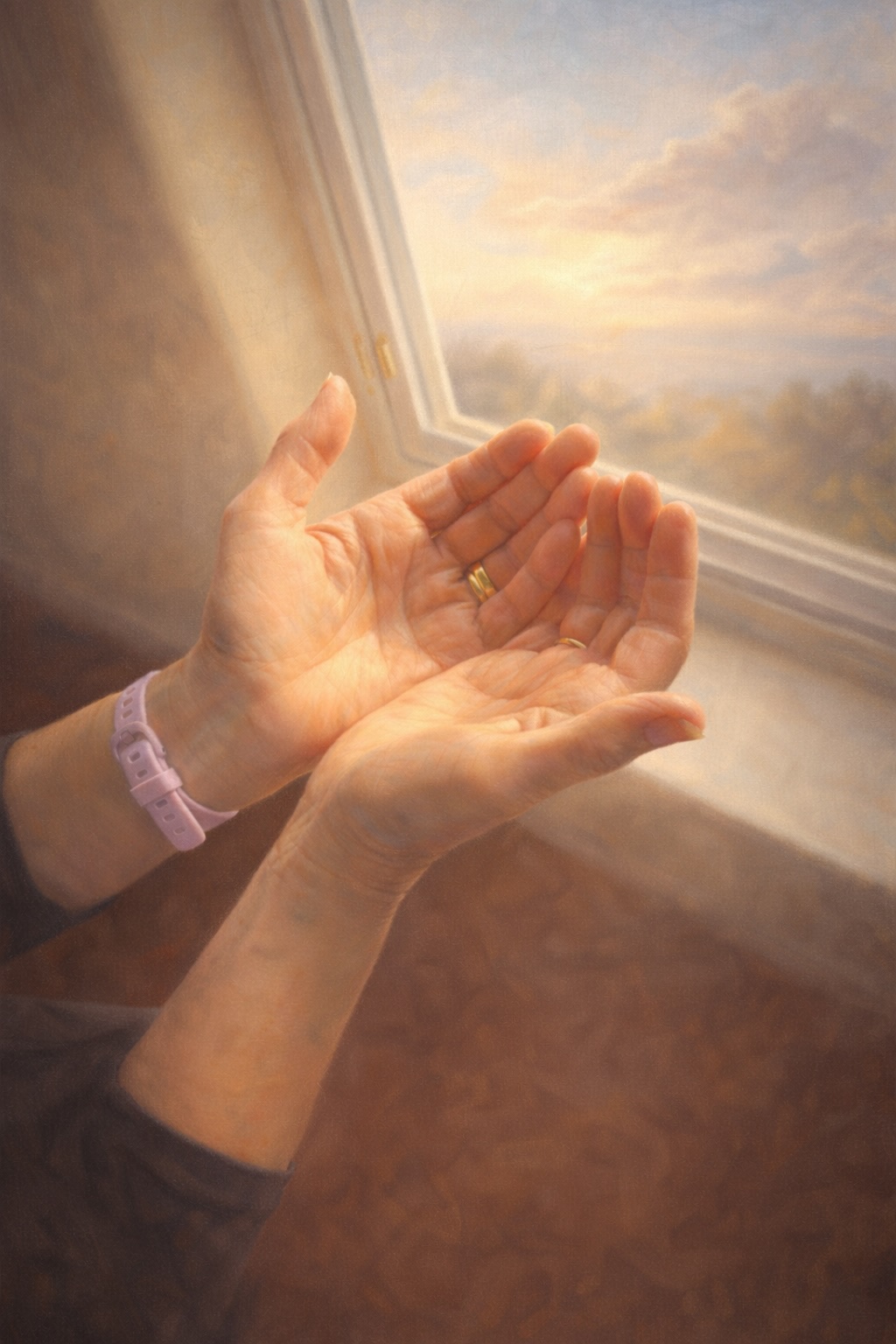
Yet there is a third place I want to find—not giving up, and not fighting to remain young, but receiving the life we actually have today.
Some days I laugh. Some days I fight. Some days I grieve. And I’m trying to learn what God wants me to do with all of it.
Then the LORD led me to Ecclesiastes 12:1–7—one of the most striking descriptions of aging in the Bible, and a passage that spans the entire chasm between seventeen and seventy-seven.
Solomon begins:
“Remember now your Creator in the days of your youth, before the difficult days come.”
What are those “difficult days”?
Solomon uses poetry to describe them because the raw facts are rather stark. I dared to look at that stark reality without the softening poetic cushion.
Solomon is essentially saying:
You are going to get old.
Your body will gradually lose strength. Your muscles won’t do what they once did. Your joints and bones become less dependable. Your teeth may deteriorate. Your eyesight and hearing may weaken. You don’t sleep as deeply, and little noises can wake you. Things you once did without thinking—climbing stairs, walking on uneven ground, getting up from a chair, carrying something heavy—may become difficult.
Your hair turns white. Your physical vitality changes. Your desires change. You become more conscious of your vulnerability and realize that your body is not invincible. And eventually, the process ends in death:
“Then the dust will return to the earth as it was, and the spirit will return to God who gave it.” — Ecclesiastes 12:7
That is remarkably blunt.
Solomon isn’t pretending that aging is beautiful. He acknowledges that aging involves loss.
Strength is lost. Vision is lost. Hearing can be lost. Mobility changes. Sleep changes. Desire changes. Confidence in your body changes.
Eventually, life itself is lost.
And yet Solomon puts the crucial instruction before the description:
“Remember now your Creator…”
He doesn’t tell us to pretend we are still young. He tells us to remember our Creator.
The body is temporary, but it is not the whole of us.
The dust goes back to the earth. The spirit goes back to God.
Perhaps this is where humor becomes helpful.
Because there are, after all, some telltale signs that we may be losing the battle against aging:
- After twenty minutes of carefully applying makeup, you discover that without your glasses, you have been putting it on approximately where you hoped your face was.
- The magnifying mirror reveals things about your face that God, in His mercy, never intended you to see at that distance.
- Your arms continue waving long after you’ve stopped.
- You squat down to retrieve something from the bottom shelf and immediately begin calculating how you’re going to get back up.
- You need your arms to be longer because the words on the medicine bottle have mysteriously shrunk.
- Your hair has become white enough that you no longer need to worry about whether it matches your outfit—it goes with everything.
- Your eyebrows have apparently decided to migrate to other parts of your face.
- Your “comfortable shoes” have become your “only shoes.”
- You finally succeed in looking younger—until you catch sight of yourself getting out of the car.
We laugh because underneath the humor is something almost everyone eventually has to face:
The body is changing, and we don’t get to negotiate the terms.
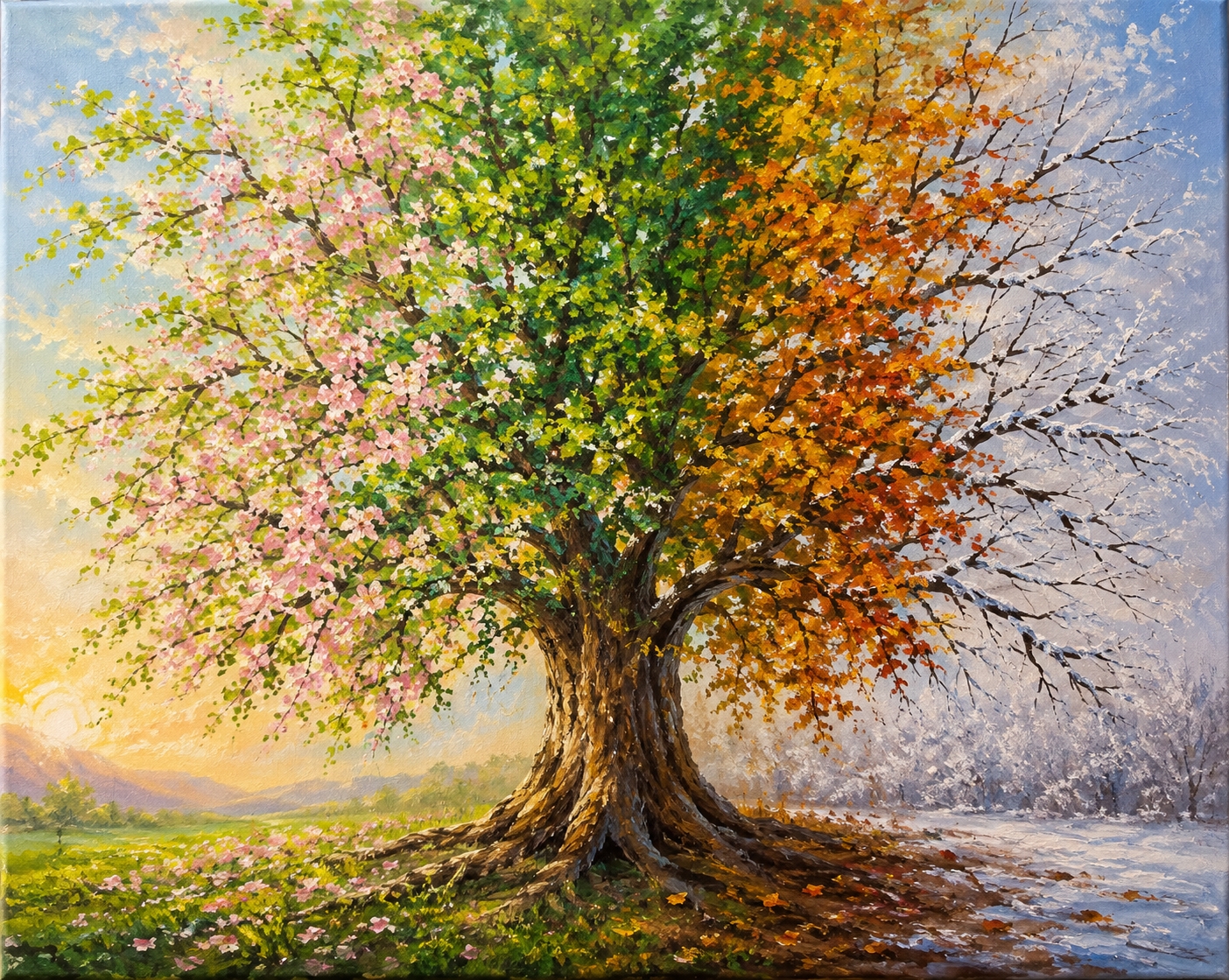
Maybe the goal isn’t to look young.
Maybe the goal is to remain fully alive while becoming old.
And this is where Solomon’s words become important not only to those of us in the “golden years,” but to those beautiful young women I see at school.
Solomon doesn’t tell young people, “Enjoy being young because you’ll miss your beautiful body someday.”
He says something much more important:
Know your Creator now.
Why?
Because the body you have today isn’t permanent.
The beautiful young face will change.
The strong young legs will weaken.
The clear eyes will dim.
The thick hair will turn white.
The effortless things will eventually require effort.
And you don’t want to wait until everything begins disappearing to discover the One who never changes.
Someday, girls, some of these will be your battles too.
But here is what I wish I had understood when I was your age:
The real tragedy isn’t getting old. The real tragedy would be reaching old age without having learned to know and love your Creator.
Don’t think, “I’m young now, so I need to prepare for becoming unattractive.”
Rather:
“I am young now, and I have an extraordinary opportunity to establish where my identity rests before life begins taking things away.”
Because life will take things away.
Childhood. Athletic ability. Certain dreams. People we love. Physical strength. Eventually, the body itself.
And if our identity has been built on beauty, accomplishment, popularity, intelligence, athleticism, romance, motherhood, career, independence, or physical ability, every loss can feel like a little death.
But if our identity has been rooted in our Creator, the losses are still painful—but they don’t destroy us.
That is a message for seventeen and seventy-seven.
Young:“I have my whole life ahead of me.”
Middle-aged:“I have so much I need to accomplish.”
Older:“I can’t do everything I once could.”
Old:“What remains when so much has been taken away?”
And Solomon answers:
“Remember your Creator.”
At the end of Ecclesiastes he says:
“Fear God and keep His commandments, for this is man’s all.”
We were never meant to build our lives around the things that eventually disappear. And perhaps this is what I am learning now. I can laugh at the white hair, wrinkles, knees, and all the other evidence that my body is telling the truth.
I can grieve what I have lost. I can be frustrated by what I can no longer do. I can even say to God, “Lord, I don’t want this.”
Trusting Him doesn’t require me to pretend that I like it. But perhaps I can stop fighting a battle I was never meant to win. Maybe the real battle is not against aging at all.
Maybe the battle is against the belief that my value, usefulness, beauty, or joy depends upon remaining physically young.
That is a battle worth winning.
And perhaps, as our bodies become less capable, there is an opportunity—painful, yes, but real—for something else to become more visible:
Who are we when we can no longer prove our worth by what we can do?
That is a very different kind of strength.
So, dear ones, whether you are seventeen or seventy-seven, don’t wait for the difficult days to remember your Creator.
Seek Him now.
Love Him now.
Build your life on Him now.
Because one day you may wake up and realize that the young woman you once were has quietly become the older woman I am today.
And when that happens, I hope you can look back and say:
“I knew Him then. I know Him now. And He has been faithful through every version of me.”
I’m certainly not the expert. I’m just a woman still figuring it out. Perhaps that is exactly what God can do with a struggle that initially felt too personal to share.
And perhaps my prayer is no longer simply, “Lord, help me accept aging.”
Perhaps it is:
“Lord, I don’t want this. I don’t know how to accept this. But I want You more than I want to win this battle. Teach me.”
And maybe that is where contentment begins.
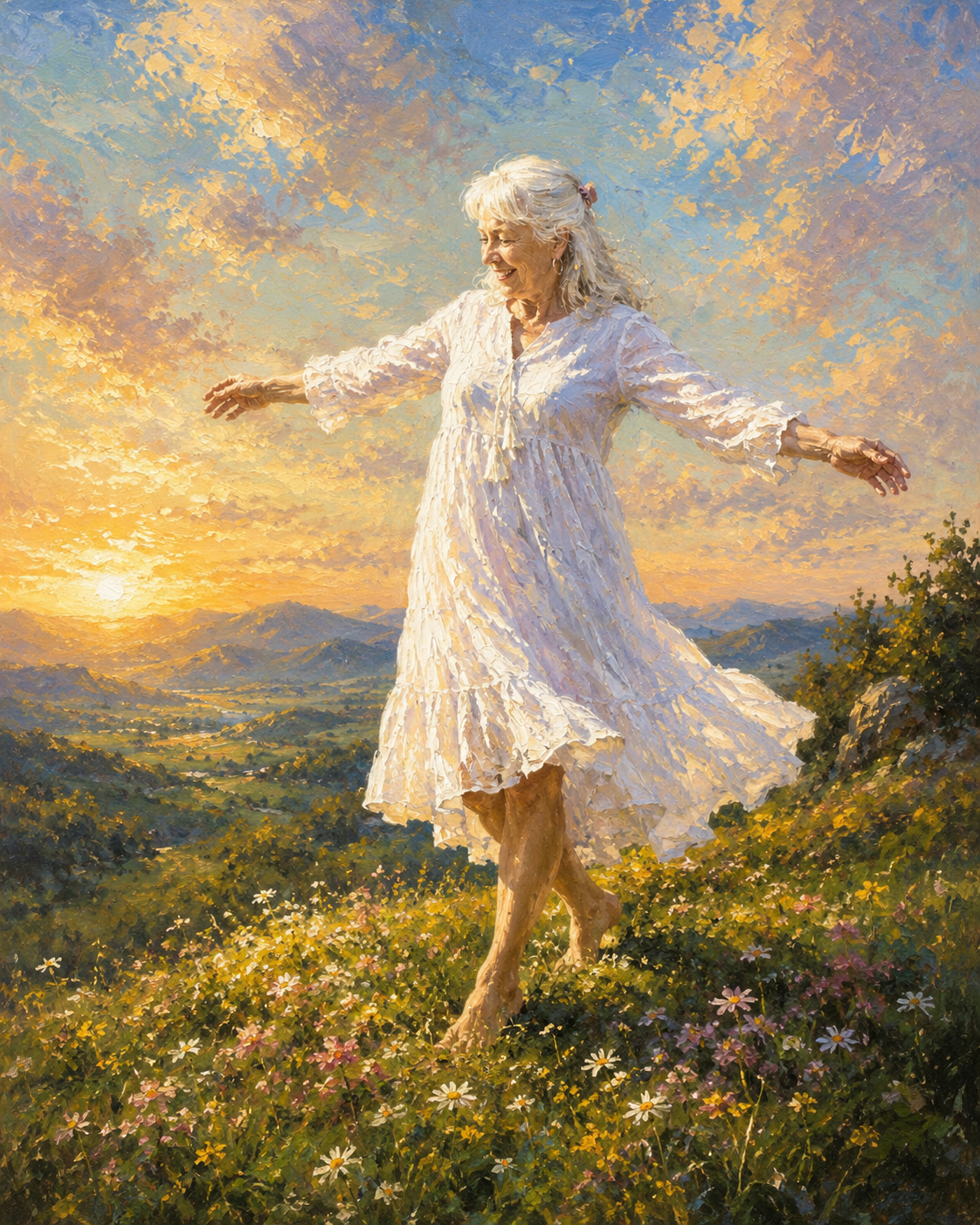
Therefore we do not lose heart.
Though outwardly we are wasting away,
yet inwardly we are being renewed day by day.
For our light and momentary troubles
are achieving for us an eternal glory
that far outweighs them all.
So we fix our eyes not on what is seen,
but on what is unseen,
since what is seen is temporary,
but what is unseen is eternal.
— 2 Corinthians 4:16–18

 Walking in the Vine Light